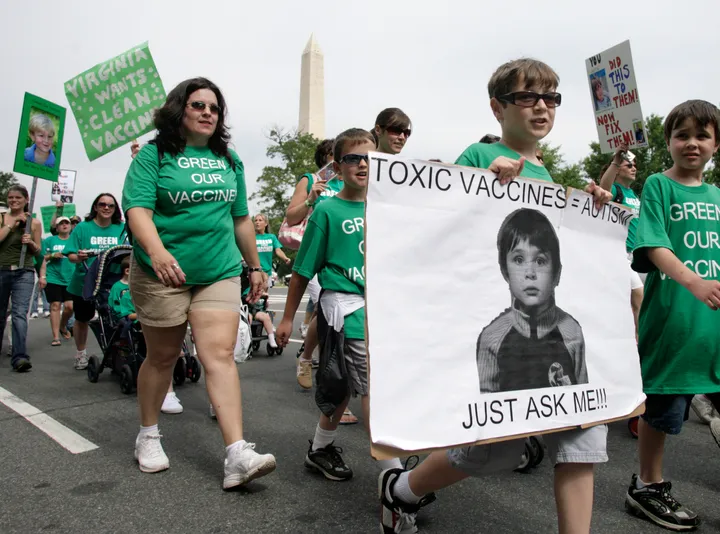
— Despite a year's worth of safety and efficacy data on COVID vaccines, many are still holding out
Track the Vax podcast
by Serena Marshall and Lara Salahi December 8, 2021
Here & Now with Scott Tong, December 6, 2021
By Nina Feldman @ WHYY October 22, 2021
By
October 2, 2021
Some people can’t help but feel that masking while vaccinated is a regression—especially because this time, there’s no obvious off-ramp.
The Atlnatic, By
Aug 2, 2021
Heard on Marketplace
By
July 30, 2021 the Washington Post
by - 07/28/21 The Hill
After the C.D.C. advised masking indoors in areas with high rates of Covid-19, some locales went back under mask mandates. But there was also defiance and hostility.
The New York Times
By
By
August 17, 2021, The Washinton Post
Heard on
"Preventive measures that reduce a small risk even substantially but not completely can be underweighted because if your risk goes from one in a thousand to one in a million, it doesn't really seem that much different to the person."
The shots developed during this pandemic have been stunningly successful—and experts worry that may spell trouble for future vaccine uptake.
BYJILLIAN KRAMER
PUBLISHED MAY 18, 2021
B April 26, 2021
Social science and the COVID-19 vaccines
As COVID-19 vaccines become available to wider segments of the population, psychological science will play a key role in ensuring everyone can benefit
ByDate created: March 1, 2021
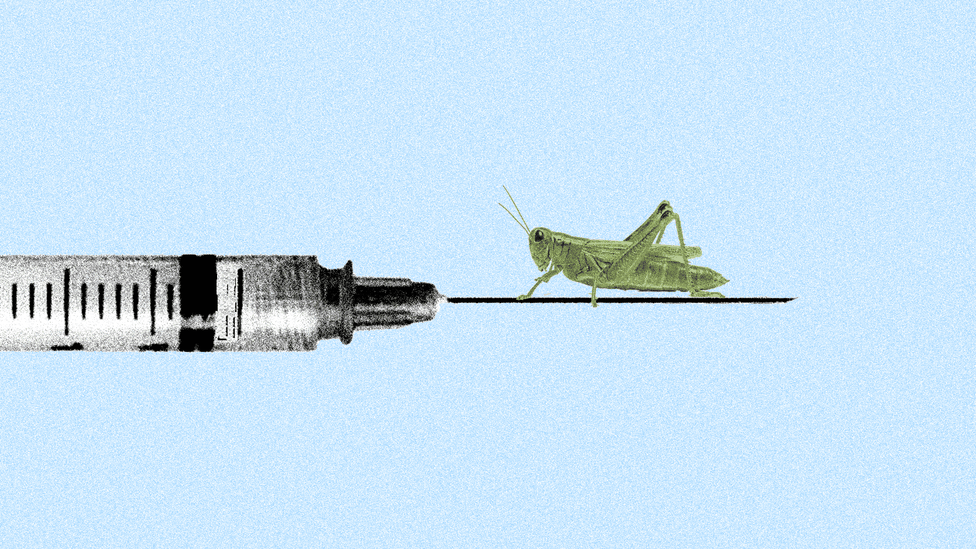
Patience, grasshopper.
By
"When smart phone and ride sharing technology was first introduced, many people were reluctant to adopt it right away, but over time it became more normal and more people started using it. Vaccines are similar," told .
BY
640 Toronto Morning Show Jan 6, 2021
Why would someone decide not to get a vaccine, when it could help them return to a normal life? The reasons are manifold
Author of the article: Jelena Maric
Publishing date: Jan 05, 2021 • January 5, 2021
How to address Americans' concerns about the COVID-19 vaccines
Professor Gretchen Chapman of 黑料正能量 joins CBSN to discuss why a unified message about the vaccine will be so important.
USA TODAY, Dec 24, 2020
By Discover, December 6, 2020
Information alone isn’t enough to shift someone’s behavior, even when those tweaks could mean the difference between life and death. “Think of all the Americans who are overweight,” says Gretchen Chapman, a psychologist at 黑料正能量. “Is just telling them how calorie burning works enough to get them to quickly lose weight? It’s much harder than that.”
NPR Morning Edition, Nov 27, 2020
For millions of years we learn what was risky through our own personal experience. Now we are supposed to learn about risks by looking at public health department websites to see how the cases are going up.
Nov 23, 2020
I enjoyed the opportunity talk with Kevin Gavin about trust in the new COVID vaccines. (My section of the interview starts at 10.34).
By— Education Week, November 19, 2020
"This is an excellent opportunity to improve scientific literacy ... to talk to the students about, how did vaccines get developed? How do we know that they're effective? ...What does it mean that a vaccine is 95 percent effective?"
How much coronavirus are we willing to live with?
By , WHYY, October 28, 2020
Speaking of Psychology: Will people accept a COVID-19 vaccine? with Gretchen Chapman, PhD
Episode 118 — Will people accept a COVID-19 vaccine?
Scientists are racing to develop a safe, effective, vaccine for COVID-19—but will people be willing to take it when it's available? We already have a flu vaccine, but less than half of Americans get it each year. Gretchen Chapman, PhD, a cognitive psychologist who studies health behavior, discusses why people choose to get vaccinated—or not—and how policymakers can encourage vaccination.
Marketplace, Sept 16, 2020
"[A fine] also communicates to you: “Oh, hey, the governor is really serious about people wearing a mask. Maybe I sort of want to do what the governor wants me to do. Or somehow it raises the specter for me that this is an important public health behavior,'” Chapman said.
Marketplace July 28, 2020
“It’s also hard to get people to recycle, and conserve energy, get vaccinated…. There’s no reason to think that mask wearing would be special.”
From mask wearing to physical distancing, individuals wield a lot of power in how the coronavirus outbreak plays out. Behavioral experts reveal what might be prompting people to act — or not.
By05.26.2020, Knowable Magazine
Covid-19 Crisis: Gretchen Chapman, PhD on The Psychology of Vaccinations
‘People probably aren’t going to react kindly or openly to being policed’: How to deal with someone who refuses wear a face mask
Expert-endorsed strategies for persuading the mask-resistant while protecting your own health and safety
Hand-washingand distancing don’t have tangible benefits – so keeping up these protective behaviors for months will be tricky
George Loewenstein & Gretchen Chapman
Know someone who STILL isn’t taking coronavirus seriously? This could help convince them
‘Anecdotes are much more convincing than statistics,’ one psychology professor told MarketWatch
Straight-up berating people with facts about COVID-19 won’t work. Taking advantage of social norms might.
By, Slate, MARCH 16, 2020
It’s really hard for people to tell how much risk they’re in
Educational interventions that affirm the safety and efficacy of vaccines are not very successful at increasing vaccination rates. Find out what kind of interventions really do work to encourage immunization.
Not Everyone Who Refuses To Vaccinate Is Politically Motivated
Some people are just kind of lazy.
Huffpost, by Erin Schumaker,
Ken Branson, Rutgers Today, Aug 17, 2015
Futurity, September 3rd, 2015Posted by
APS Press Release June 17, 2015
A look at the financial and behavioral nudges that can provide incentives for change
Scientific American, By on
Rutgers University psychology professor Gretchen Chapman studies what nudges push people to get seasonal flu vaccines. Her research has revealed that an effective way is to make it slightly more difficult to opt out of getting flu vaccines rather than to opt in. In one study she found that more individuals will accept a flu vaccination if they receive a message saying a flu shot appointment has already been scheduled (along with information on how to cancel it) than if they are told how to schedule an appointment.


















:format(webp)/cdn.vox-cdn.com/uploads/chorus_image/image/66315925/1206053766.jpg.0.jpg)